
When homeowners walk the perimeter of their property after a professional termite installation, one question comes up more than any other: Are these green caps really close enough together to protect my entire house? Looking at bait stations spaced around a yard, it can feel like there is plenty of open soil for subterranean termites to squeeze right past. However, that 10-foot spacing interval isn’t a random guess or a cost-cutting shortcut—it is a precise distance dictated by subterranean termite behavior, soil dynamics, and statistical modeling.
What the Science Says
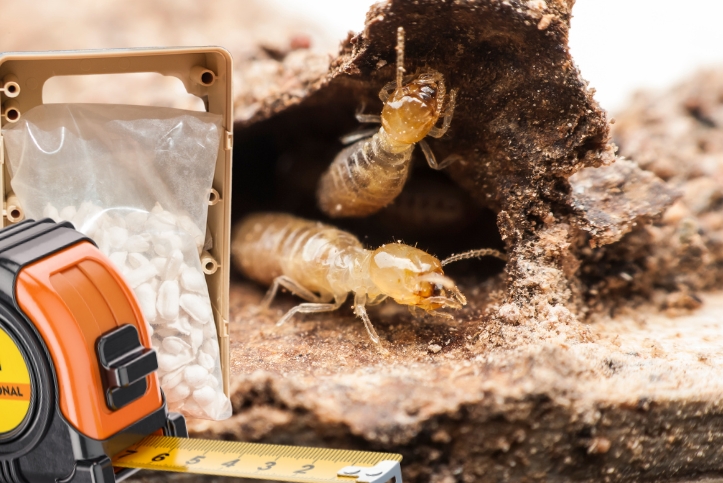
Subterranean termites do not possess long-range vision, nor do they “smell” the wood in your home from feet away. Instead, worker termites forage using random, continuous underground tunneling. They push through the top few feet of soil in branching, radial patterns until their heads physically bump into a cellulose food source or a solid barrier.
Because subterranean termites forage blindly, perimeter bait systems rely entirely on physical intersection probability. Entomological field studies show that termite foraging galleries form dense, web-like networks in the upper soil layers. By placing bait stations every 10 feet (3 meters) along a structure’s perimeter:
-
The stations create an overlapping line of defense around the foundation.
-
The statistical probability of a foraging tunnel hitting a station before reaching your home’s footings approaches near 100%.
-
Spacing stations wider (such as 15 or 20 feet apart) leaves wide blind spots where termite galleries can pass through undetected. Conversely, placing them closer than 10 feet drastically increases equipment costs without offering any measurable boost in protection.
Key Homeowner Takeaways
-
Blind Foraging Means Placement Matters: Termites don’t target your home intentionally; they wander into it. Bait stations act as artificial obstacles placed directly in their natural search paths.
-
The 10-Foot Grid Maximizes Coverage: Spacing stations 10 feet apart balances maximum interception speed with cost-effective coverage, catching termites while they are still in the yard.
-
Colony Elimination Over Local Suppression: When termites discover a bait station, they recruit other workers to the site. They carry slow-acting active ingredients back to the underground nest, wiping out the entire colony—including the queen—rather than just killing a few workers at the surface.
Why Termite Protection Is Best Left to Professionals
While the 10-foot rule sounds simple on paper, installing and maintaining a perimeter baiting system in the real world is far more complex than driving plastic stakes into the dirt:
-
Navigating Structural Obstacles: Concrete driveways, paved patios, rock landscaping, and utility lines routinely break up ideal 10-foot spacing. Experienced technicians know how to drill through slab, use specialized subterranean mounts, or adjust angles to maintain an unbroken protection zone.
-
Soil Conditions & Moisture Factors: Termites prefer moist, undisturbed soil. Professionals evaluate slope, gutter downspout drainage, and soil compaction to ensure stations are placed in high-risk foraging zones.
-
Routine Monitoring & Cartridge Replacement: A bait station is only effective if it is actively inspected, cleaned of soil debris, and refreshed when bait is consumed. Missing a routine check can allow a colony to move past an exhausted station.
Take Action to Protect Your Home from Termites
Hoffman’s Exterminating offers comprehensive termite monitoring, baiting, and liquid defense services throughout Philadelphia and South Jersey. Their certified technicians inspect foundation walls, calculate precise bait placement geometry, and provide year-round monitoring to eliminate subterranean termite colonies before they ever reach your home.
“Termite damage happens silently underground, which is why precise installation protocols and professional monitoring are so vital,” the Hoffman’s representative added. “Leaving termite protection to trained professionals gives homeowners complete peace of mind that their foundation is fully secured against expensive structural damage.”
If you want to protect your home from subterranean termites or need your existing system inspected, don’t leave your foundation to chance. Contact Hoffman’s Exterminating today to schedule a professional termite inspection and customized defense plan. Their knowledgeable team is dedicated to keeping properties across Philadelphia and South Jersey safe, sound, and termite-free.
Follow Hoffman’s Facebook page for more pest control tips, advice, and industry updates.